
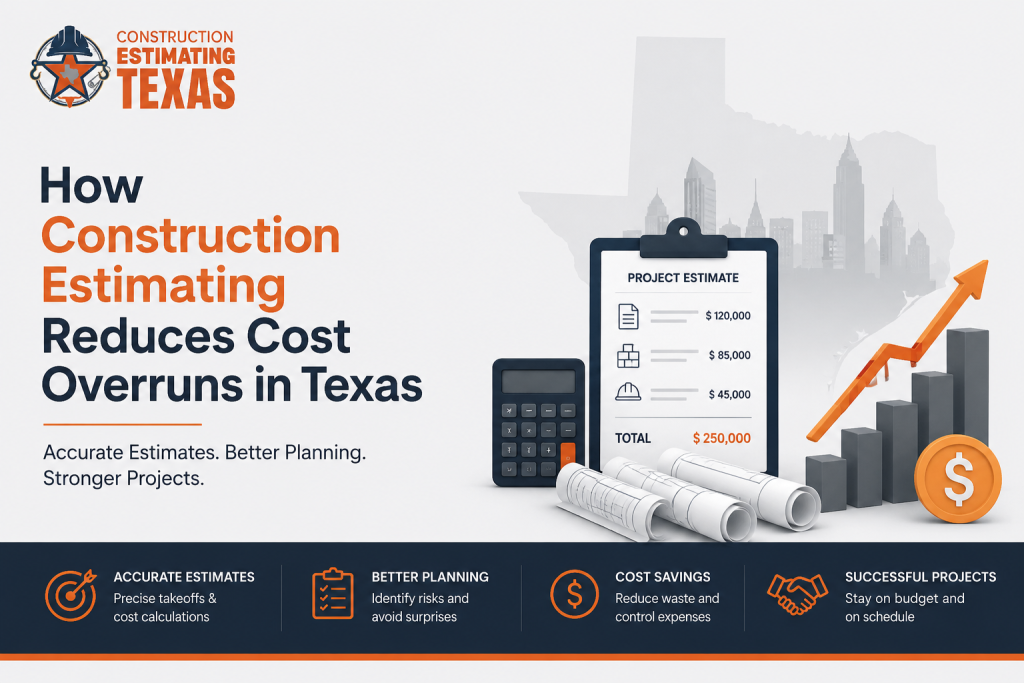
Construction projects rarely go over budget because of one big mistake. More often, small details missed during planning slowly turn into costly problems. A contractor may start with a solid budget, but rising material prices, changing project requirements, or incorrect quantities can quickly increase expenses and affect profitability.
This is where detailed construction estimating makes a difference. By reviewing drawings, measuring quantities, analyzing labor needs, and considering current market prices, estimators help contractors understand the real cost of a project before work begins. For Texas contractors, reliable Texas construction estimating services support better bids, cost control, and smoother project execution.
Why Construction Projects Go Over Budget
Cost overruns happen when the actual project expenses exceed the original budget. These increases can occur due to poor planning, inaccurate estimates, design changes, or unexpected site conditions. In Texas, where construction activity continues across residential, commercial, and infrastructure sectors, controlling these risks is important for maintaining profitability. Common causes of construction cost overruns include:
- Incorrect material quantity calculations
- Outdated material and labor pricing
- Unclear project scope
- Underestimated labor requirements
- Unexpected changes during construction
- Poor resource planning
- Missing project details during bidding
How Estimating Supports Smarter Cost Management
Construction estimating provides contractors with detailed cost information before a project begins. Instead of relying on assumptions, estimators analyze every part of the project to create a realistic budget. This detailed approach helps contractors understand where money will be spent and make adjustments before construction starts.
- Reviewing construction drawings and specifications
- Measuring material quantities through takeoffs
- Calculating labor requirements
- Evaluating equipment and subcontractor costs
- Applying current market pricing
- Identifying potential project risks
Reducing Material Waste Through Accurate Quantity Takeoffs
Material expenses make up a large portion of any construction budget. Incorrect quantities can lead to purchasing too much material or running short during construction. Accurate takeoffs allow contractors to purchase the right amount of materials, reduce waste, and avoid unexpected costs caused by shortages. Construction estimators help prevent these issues by preparing detailed quantity takeoffs.
- Concrete and structural materials
- Lumber and framing components
- Drywall and finishes
- Electrical and plumbing materials
- Mechanical systems
Managing Labor Costs Through Better Planning
Labor expenses can quickly impact a project’s budget when they are not estimated properly. Underestimating labor hours may result in overtime costs, schedule delays, and reduced profits. This helps contractors create realistic labor budgets and allocate resources more effectively throughout the project.
- Project complexity
- Installation requirements
- Crew productivity
- Site conditions
- Construction timeline
Using Current Texas Market Pricing
Construction costs vary depending on location, material availability, and market conditions. Prices for materials, equipment, and labor can change frequently, making outdated estimates risky. For Texas projects, considering local pricing differences helps contractors create budgets that better reflect actual construction expenses. Construction estimators use updated pricing information to account for:
- Regional labor rates
- Current supplier costs
- Equipment expenses
- Delivery charges
- Local market conditions
Identifying Project Risks Before Construction Begins
Many cost overruns occur because potential problems are discovered after construction has already started. A detailed estimate helps identify these issues earlier. Finding these issues before bidding allows contractors to address problems early and avoid expensive changes later. Estimators review project documents to find:
- Missing scope details
- Conflicting drawings
- Unclear specifications
- Additional material requirements
- Possible construction challenges
Improving Budget Planning with Accurate Estimates
A reliable estimate gives contractors a stronger foundation for managing project finances. It helps them plan spending, schedule purchases, and monitor costs throughout construction. With better cost visibility, contractors can respond quickly if project conditions change. Accurate estimating supports:
- Better cash flow planning
- More effective procurement
- Improved subcontractor coordination
- Realistic project timelines
- Better financial decisions
Reducing Change Orders and Unexpected Expenses
Change orders often increase project costs and create delays. While some changes are unavoidable, many result from incomplete planning or missed details during estimating. A thorough estimate reduces these risks by ensuring project requirements are reviewed before construction begins. When contractors have a complete understanding of the scope, they can prepare stronger budgets and reduce surprises during execution.
Managing Texas Construction Cost Challenges
Construction projects in Texas come with unique challenges that can affect budgets if they are not planned properly. Rapid population growth, changing material costs, labor availability, and regional differences can make it difficult for contractors to maintain accurate project budgets. Contractors can also review Texas building permit data from the U.S. Census Bureau when evaluating construction activity and planning project costs.
Rising Material Costs
Fluctuating prices for materials like steel, lumber, concrete, and electrical components can quickly increase project expenses. Updated pricing helps contractors prepare estimates that better reflect current market conditions.
Labor Availability and Wage Changes
Finding skilled workers can be challenging in busy construction markets. Changes in labor rates and workforce availability can impact project costs if labor requirements are not calculated correctly.
Regional Cost Differences
Construction costs can vary across Texas cities due to differences in supplier pricing, labor rates, transportation expenses, and local market demand. Estimators consider these factors to create more realistic budgets.
Project Scope Changes
Changes in design, materials, or client requirements can increase costs during construction. Reviewing project details carefully before bidding helps contractors identify potential issues early.
Weather and Site Conditions
Texas projects may face weather-related challenges such as extreme heat, storms, or site accessibility issues. These factors can affect schedules, labor productivity, and overall project costs.
How Estimating Software Helps Control Costs
Modern estimating tools improve the speed and accuracy of construction cost analysis. Digital platforms allow estimators to perform takeoffs, organize project data, and create detailed reports more efficiently. These technologies help reduce manual errors and provide contractors with clearer cost information before making financial commitments.
- PlanSwift
- Bluebeam Revu
- On-Screen Takeoff (OST)
- AutoCAD
- RSMeans
- Microsoft Excel
Why Texas Contractors Benefit from Outsourced Estimating
Many contractors outsource construction estimating to access experienced support without maintaining a full-time estimating department. Construction Estimating Texas provides reliable estimating support that helps contractors handle more bidding opportunities while keeping internal teams focused on active projects. For contractors managing multiple projects, outsourcing can improve efficiency and reduce the risk of costly estimating mistakes.
- Faster estimate preparation
- Reduced workload
- Access to experienced estimators
- Detailed quantity takeoffs
- Better cost planning
- Support during busy bidding periods
Conclusion
Construction estimating helps contractors identify project costs before work begins and reduces the risk of unexpected expenses. By combining detailed takeoffs, current pricing, labor analysis, and scope reviews, estimators provide the information needed for better budgeting and planning. For Texas contractors, reliable estimating support leads to stronger bids, improved cost control, and smoother project execution. Planning costs early helps avoid unnecessary overruns and keeps projects financially on track.
Frequently Asked Questions
How can contractors reduce the risk of unexpected construction costs?
Contractors can reduce unexpected expenses by reviewing project details early, maintaining clear communication with project teams, tracking cost changes, and updating estimates as the project develops.
Can construction estimating help with material selection decisions?
Yes. Estimators can compare material options based on cost, availability, and project requirements. This helps contractors choose solutions that meet the budget without affecting project goals.
How do construction estimators handle subcontractor pricing?
Estimators review subcontractor quotes, compare pricing, and evaluate whether costs align with the project scope. This helps contractors include realistic subcontractor expenses in their overall budget.
Why is cost tracking important during construction?
Cost tracking allows contractors to compare actual expenses with the original estimate. It helps identify budget issues early and allows teams to make adjustments before costs increase significantly.
Can estimating services help contractors with large-scale Texas projects?
Yes. Estimating services can support projects of different sizes by analyzing complex drawings, multiple trades, labor requirements, and material costs to create detailed project budgets.
