
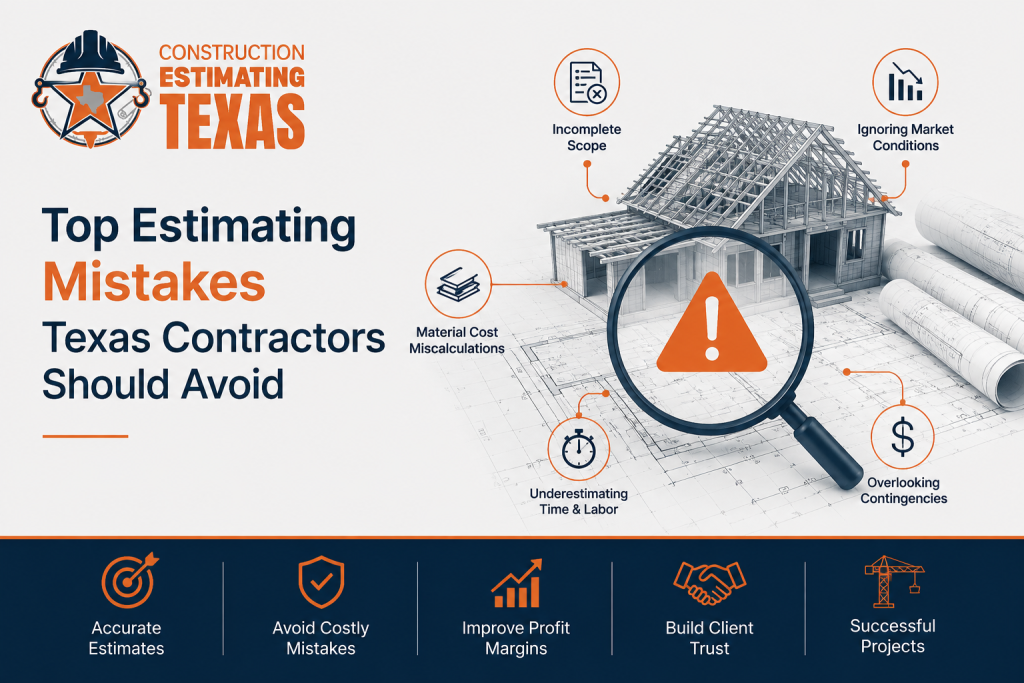
Every estimate carries the risk of turning a profitable project into a costly one if important details are overlooked. For many Texas contractors, rising material prices, changing labor rates, permit requirements, and missed project costs often lead to underestimated bids, unexpected expenses, and reduced profit margins once construction begins.
As construction activity continues to grow across Texas, preparing an accurate estimate requires more than calculating quantities and unit prices. Contractors must consider every cost that can affect the project budget, which is why many rely on Texas construction estimating services to prepare accurate bids, reduce financial risks, and stay competitive.
Why Texas Contractors Need Reliable Cost Estimates
Construction projects require careful cost planning because even small estimating mistakes can impact profitability. Missing cost details may result in unexpected expenses, delays, or change orders. In Texas’s competitive construction market, contractors need accurate estimates that offer competitive bids while ensuring projects remain financially profitable. A well-prepared estimate helps contractors manage resources, control budgets, and avoid costly surprises throughout the construction process.
Ignoring Complete Project Documents During Estimating
One common estimating mistake is relying only on construction drawings while ignoring specifications, schedules, and contract documents. Drawings provide valuable information, but they may not include all project requirements.
Specifications and related documents contain important details about materials, installation methods, quality standards, and responsibilities. Reviewing all project documents before estimating helps contractors avoid missing costs and prepare more accurate bids.
Ignoring Material Price Fluctuations
Material prices fluctuate due to market conditions, supply chain issues, transportation costs, and demand. Using outdated supplier pricing can lead to inaccurate estimates and reduced profits when actual costs increase during construction.
Contractors should obtain updated supplier quotations before bidding to ensure material costs are current and reliable. This approach helps create realistic estimates, improve budget planning, and reduce the risk of unexpected expenses that can affect project success.
Underestimating Labor Costs
Labor is one of the biggest expenses in construction, but many contractors underestimate the time and resources needed to complete the work. Factors such as project complexity, crew experience, weather, and site conditions can significantly affect labor productivity.
Texas contractors should consider overtime, skilled labor availability, benefits, insurance, and payroll taxes when calculating labor costs. Including these factors in estimates helps create realistic budgets, control expenses, and protect profit margins throughout the project.
Incorrect Quantity Takeoffs
Accurate quantity takeoffs form the foundation of every successful construction estimate. Even a small measuring error can affect material orders, labor planning, and overall project costs. Modern digital takeoff software can improve measurement accuracy and reduce the risk of costly calculation errors. Common quantity takeoff mistakes include:
- Missing items during measurements
- Double-counting materials
- Using incorrect measurement units
- Failing to include waste factors
- Overlooking specialty materials
Overlooking Equipment and Rental Costs in Estimates
Many estimates focus primarily on labor and materials while overlooking the equipment needed to complete the project efficiently. In addition to rental fees, contractors should budget for fuel, transportation, maintenance, operators, and equipment downtime. Including these expenses in the estimate helps prevent unexpected costs during construction. Depending on the project, contractors may require:
- Excavators
- Cranes
- Scissor lifts
- Forklifts
- Concrete pumps
- Air compressors
- Temporary generators
- Safety equipment
Missing Permit and Inspection Costs
Many contractors underestimate the cost of permits by assuming they only involve a simple application fee. In reality, construction projects across Texas often require building permits, inspections, utility approvals, and other local requirements that vary by city and county. Failing to include these expenses can reduce profit margins and delay project completion if additional approvals are needed. Verifying local permitting requirements before submitting a bid helps contractors prepare more realistic estimates.
- Building permit fees
- Plan review charges
- Utility connection permits
- Inspection fees
- Occupancy certificates
- Engineering revisions
Ignoring Site Conditions During Construction Estimating
Every construction site presents unique challenges that directly affect project costs. Contractors who estimate projects without evaluating site conditions often encounter unexpected expenses after work begins. Conducting a site visit before preparing an estimate allows contractors to identify these challenges early and include the necessary labor, equipment, and material costs in their bids. Factors that can influence construction costs include:
- Uneven terrain
- Poor soil conditions
- Limited site access
- Existing underground utilities
- Drainage issues
- Traffic restrictions
Excluding Contingency Costs
Unexpected situations are common in construction, especially on renovation projects where hidden conditions are not always visible during bidding. Without a contingency allowance, even small unforeseen issues can reduce project profitability. Including a reasonable contingency helps contractors manage risks without significantly affecting the competitiveness of their bids.
- Material price increases
- Design revisions
- Hidden structural damage
- Weather delays
- Unexpected utility conflicts
- Additional owner requests
Relying on Outdated Pricing Data
Construction costs change regularly, making outdated pricing one of the leading causes of inaccurate estimates. Contractors who reuse old spreadsheets or previous project data may overlook recent increases in labor rates, equipment rentals, or material prices. Using current cost information results in estimates that better reflect actual project expenses.
- Request updated supplier quotations
- Review current labor rates
- Update equipment rental costs
- Monitor market price trends
- Verify subcontractor pricing
Rushing Bid Preparation
Bid deadlines can be demanding, but rushing through an estimate often leads to costly mistakes. Skipping document reviews, missing project requirements, or overlooking quantities can result in inaccurate bids that affect profitability. A careful final review can prevent expensive errors and improve the quality of every bid.
- Review all drawings and specifications
- Verify quantity takeoffs
- Double-check calculations
- Confirm subcontractor quotes
- Review material pricing
- Ensure all project requirements are included
How Contractors Can Improve Their Estimates
Improving estimate accuracy requires a structured process instead of relying on assumptions. Contractors should review project documents, inspect job sites, verify current pricing, and update labor and equipment costs regularly. Digital takeoff tools can also help reduce errors and improve efficiency.
Many contractors work with experienced estimators who understand local market conditions and construction requirements. Construction Estimating Texas helps prepare detailed estimates that reduce missed costs, improve bidding confidence, and support better budget control throughout the project.
Benefits of Expert Estimating Support for Texas Construction Projects
Preparing a competitive bid requires more than simply measuring quantities. Contractors need to consider labor, materials, equipment, permits, subcontractor costs, and project-specific requirements. Professional estimating services in Texas help organize these details into clear and accurate cost estimates, allowing contractors to make better decisions before construction starts.
Typical estimating services include:
- Quantity takeoffs
- Material cost analysis
- Labor cost calculations
- Equipment cost estimation
- Bid preparation support
- Budget planning
- Value engineering
- Detailed cost reports for residential, commercial, and industrial projects
By working with Construction Estimating Texas, contractors can minimize estimating mistakes, improve bidding accuracy, save time, and focus on project execution rather than dealing with unexpected costs after construction begins.
Improve Your Construction Bidding Success with Better Estimates
Strong project planning starts with a clear understanding of costs and accurate estimates. Avoiding common mistakes like incorrect takeoffs, outdated pricing, and overlooked expenses helps contractors prepare competitive bids and maintain healthy profit margins. By following better estimating practices and getting expert support, Texas contractors can reduce risks, improve efficiency, and increase their chances of winning projects. A well-prepared estimate also supports better budget control and smoother project execution from start to finish.
Frequently Asked Questions
How much does a construction estimate cost in Texas?
The cost of a construction estimate depends on the project size, complexity, type of construction, and level of detail required. Residential, commercial, and industrial projects may require different estimating approaches and resources.
What documents are needed to prepare an accurate construction estimate?
Contractors usually need architectural drawings, engineering plans, project specifications, scope details, and bid instructions. Providing complete documents helps estimators understand project requirements and prepare more reliable cost reports.
Can construction estimates be updated if project details change?
Yes, estimates can be revised when there are design changes, updated material prices, or new project requirements. Updating estimates helps contractors maintain accurate budgets throughout the construction process.
How do professional estimating services help contractors save time?
Professional estimators handle quantity calculations, cost analysis, and bid preparation, allowing contractors to focus on project management and business growth while reducing the risk of costly estimating errors.
